10X Health Methylation Genetic Test Review: Is the $599 DNA Test Actually Worth It?
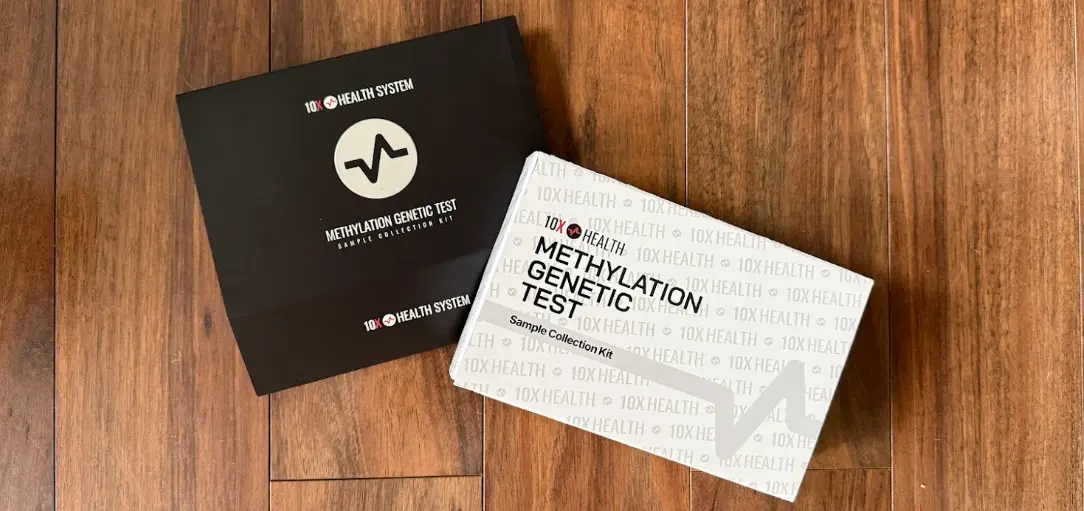

The following is a paid promotion for 10X Health System. 10X Health System provided the product reviewed in this article and/or compensated The Journiest for this content.
The wellness space has gotten so crowded that it’s hard to know what’s worth your time and money – and what’s just a beautifully packaged placebo.
So when I first heard about 10X Health’s Methylation Genetic Test, a $599 at-home DNA kit claiming to decode how your genes affect your energy, weight, and nutrition, my first instinct was skepticism. I wasn’t expecting a cure – I was looking for clarity.
But I was also tired (the bone-deep, won’t-quit kind). Low mood, brain fog, and weight that wouldn’t budge, no matter what I tried. These were my daily battles, and my standard blood work showed… nothing. Everything fine. But I didn’t feel fine. I was desperate for actual answers.
After digging much deeper into 10X Health, I learned that their results are CLIA-certified, reviewed by licensed healthcare professionals, and handled in accordance with their privacy policy. With more than 160,000 tests completed and plenty of positive customer feedback, my skepticism started to fade. The more I researched, the more curious I became, so I decided to just go for it.
What is the 10X Methylation Genetic Test?
The 10X Methylation Genetic Test analyzes five specific genes – MTHFR, COMT, AHCY, MTR, and MTRR – involved in a process called methylation: how your body converts raw nutrients into forms it can actually use. Think of it as checking whether your body has all the right parts to function properly.
The kit arrives at your door, you collect a saliva sample, send it back, and a few weeks later, a personalized report lands in your inbox. You can also book a one-on-one call with a 10X clinical provider to walk through your results, which was really useful in my whole experience.
The Results Are Really Specific
The entire testing experience was incredibly easy, and I got my report back in no time.
My first eye-opener was that it flagged a genetic sensitivity to caffeine.* Not “maybe cut back” – caffeine was categorized as something my body processes closer to a toxin. For someone who’d been running on two cups of coffee a day, wondering why her anxiety spikes, that was a notable data point.
My results suggested a genetic variation that, according to my 10X clinician, may influence how my body responds to omega-3 supplementation – something worth discussing with my doctor.** The idea that a supplement I’d been taking in good faith might be working against me based on my specific genetics was exactly the kind of concrete, counterintuitive finding that makes a test worth doing.
The weight analysis felt almost uncomfortably accurate. My results identified me as a strong carbohydrate metabolizer, and recommended a diet of roughly 60% carbs, 20% protein, 20% fat.*** I’ve spent years forcing myself toward the 40/40/20 split that fitness culture promotes. It never felt right and was genuinely hard to sustain. Seeing a report confirm that my natural pull toward higher carbs isn’t a discipline problem (it’s in my genes!) was probably the most scientifically sophisticated self-justification I’ve ever encountered.
The exercise breakdown was also interesting: 70% endurance, 30% strength for optimal results, because my profile shows calorie restriction is less effective for me than movement. I could have benefited from that information years ago.
More Practical Than I Expected
Beyond the gene-by-gene breakdown, the report included lifestyle guidance that was surprisingly concrete: use air purifiers and filtered water to support detoxification pathways, increase antioxidants through decaf coffee, green tea, berries, and dark chocolate (the first supplement advice I’ve ever been happy to follow), and limit table salt to support healthy blood pressure levels. Each recommendation tied back to a specific genetic finding rather than generic wellness advice, which made it feel earned rather than filler.
What I didn’t expect was the full precision nutrition plan – every single food (A-Z), labeled as beneficial, neutral, or best avoided based on your specific genetic results. There’s a weight loss strategy with snacks you should reach for, dishes that work best for your profile, and an exercise plan built around your genetics. Pair that with personalized supplement recommendations and optional precision IV therapy, and you start to realize this isn’t just a test – it’s the most detailed health guide I’ve ever seen about myself. Genuinely mind-blowing.
That said, going through the report solo is doable, but it’s a lot to absorb at once – which is where the clinician call earns its place. She walked me through the omega-3 finding, contextualized the caffeine sensitivity, and helped me figure out what to actually prioritize.
My Honest Take
Yes, $599 is a significant ask, but in my opinion, it is worth it if you finally want real health answers based on your actual genetic profile.
The results gave me specific information I never would have uncovered through a standard blood test or wellness quiz. More importantly, they helped me better understand how my body works, what it needs, and why it responds the way it does. That clarity meant less guesswork and a greater sense of confidence in my health decisions.
If you’ve been doing all the right things and still don’t feel your best, your genes may hold some of the answers.
*10X Health’s genetic test results offer insights into your genetic predispositions. This product is not intended to diagnose, treat, cure, or prevent any disease. The information provided by this test does not constitute medical advice. Consult a qualified healthcare provider before making any health decisions based on your results.
**Genetic insights do not constitute medical advice. Consult your healthcare provider before modifying any supplement regimen.
***Individual results may vary. This review reflects one person’s experience and should not be interpreted as a guarantee of similar outcomes.